What To Know About the Life Cycle of Head Lice
Head lice move through a predictable life cycle. A clear understanding of each stage helps families respond faster, treat more effectively, and avoid the frustration of repeated lice problems.
Hair Fairies has served families dealing with lice for decades, so we have lots of experience identifying lice at different stages in this cycle. We’re here to provide everything you neeed to know about the life cycle of head lice to help families understand the stage of their infestation and how to proceed with treatment.
Why The Life Cycle Matters
Many parents first notice itching, scratching, or visible bugs and assume one treatment should solve the problem. In reality, head lice eggs, young lice, and adult lice all require attention at the right time.
The life cycle matters because missing even one stage can allow the infestation to continue. When nits stay attached to the hair or newly hatched lice remain on the scalp, the problem can quickly start again.
A professional approach focuses on more than what is visible in the moment. It looks at where lice are in the cycle and what needs to happen next to fully clear the infestation.
The Three Main Stages Of Head Lice
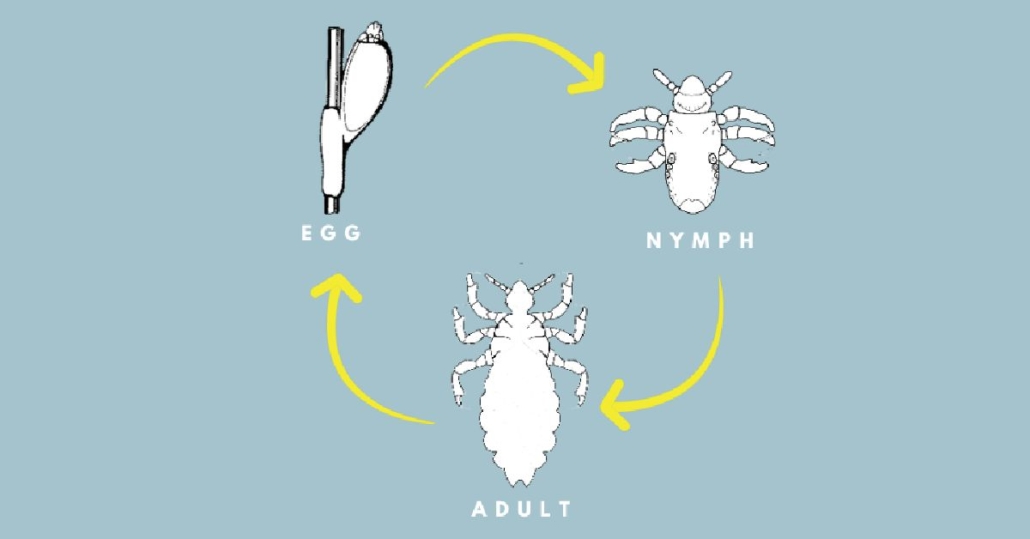
Head lice pass through three main stages: egg, nymph, and adult. Each stage looks different, behaves differently, and requires careful identification.
Egg Stage
A lice egg is often called a nit. Nits are tiny, oval, and attached firmly to the hair shaft, usually close to the scalp where warmth helps them develop.
Nits do not brush away like dandruff or lint. Most eggs hatch in about seven to 10 days. Once hatching begins, the next stage starts quickly and the infestation becomes more active.
Nymph Stage
A nymph is a young louse that has hatched but has not yet reached adulthood. Nymphs look like smaller versions of adult lice and begin feeding right away.
This stage lasts about seven to 10 days. During that time, nymphs grow through several molts before becoming adult lice that can reproduce.
Because nymphs are tiny and fast, they are easy to miss during an at-home check. That is why follow-up care matters so much after the first treatment.
Adult Stage
Adult lice are about the size of a sesame seed and live on the scalp, where they feed and continue the cycle. Female lice can begin laying eggs soon after reaching maturity.
An adult louse can lay several eggs each day. That steady egg production explains how a small problem can turn into a larger infestation in a short period of time.
Once adult lice appear, families often need a methodical removal plan to stop the cycle at every stage. Quick action reduces stress and limits the chance of lice spreading to others in the household.
How Long The Full Life Cycle Takes
The full life cycle of head lice usually takes about three weeks from egg to reproducing adult. A family may remove visible lice and still have unhatched eggs present. Several days later, those eggs can hatch and make it look like treatment failed, even when the real issue is that the cycle had not fully ended.
This timing is one reason professional salons emphasize careful rechecks and complete removal. Good lice care addresses both what is active now and what could hatch next.
Why Lice Seem To Come Back
Lice often seem to come back for one of two reasons. Either some eggs remained on the hair, or a recent exposure happened again through close head-to-head contact.
Most repeat cases are not true new infestations. They usually come from an incomplete first round of removal, especially when nits stay attached near the scalp and hatch later.
A professional lice treatment salon like Hair Fairies can help determine whether the issue is ongoing hatching or a fresh exposure. That distinction matters because it shapes the next step in care.
What Professional Removal Looks For
A trained removal expert does more than look for movement in the hair. A proper assessment checks the scalp, the hair shaft, and the location and condition of nits.
That close examination helps identify whether eggs are likely viable or already empty. It also helps determine how far along the infestation may be.
Hair Fairies takes a salon-based approach designed for families who want safe, effective support without adding harsh chemicals to the process. Our company has built its reputation on non-toxic, plant-based products and meticulous removal techniques backed by a treatment guarantee.
Why Timing Is Everything In Treatment
The life cycle of lice creates narrow windows where treatment works best. Removing adult lice but missing eggs can lead to new hatchings within days.
That is why timing follow-up care correctly matters so much. A strong plan accounts for the development of eggs and nymphs, not just the lice seen during the first check.
Professional lice removal often saves families time, stress, and repeated attempts. Instead of chasing the problem from one stage to the next, the goal is to interrupt the full cycle as early as possible.
How Home Care Supports The Process
At-home maintenance still plays an important role after professional treatment or a careful screening. Families benefit from using well-chosen products and following scalp checks closely during the days after removal.
Hair Fairies also offers home care lice treatment products for families who want support between checks or need practical tools on hand. Our products fit naturally into a broader lice care plan and can help families stay consistent once treatment begins.
Home care works best when it supports a clear strategy rather than replacing one. The goal is not to guess through the life cycle, but to respond to it with the right steps at the right time.
When To Seek Help From A Professional Salon
A lice removal salon visit makes sense when repeated at-home efforts have not solved the problem, when nits remain difficult to remove, or when more than one family member may have lice. Fast help also matters when lice disrupt school, work, or daily routines.
Parents often feel overwhelmed because lice move quickly and hide easily. Expert support can bring clarity, especially when the life cycle has already progressed past the earliest stage. For households that want trusted guidance, a lice treatment salon can provide the detailed care needed to stop the cycle and move forward with confidence.
Understanding The Lice Life Cycle
The life cycle of head lice explains why infestations can feel stubborn and why partial treatment often leads to more frustration. Eggs hatch, nymphs grow, and adults lay more eggs unless every stage gets proper attention.
A calm, informed response makes a real difference. When families understand the cycle and know when to seek expert care, lice become a manageable problem instead of a lingering one.
For families dealing with an active infestation, professional screening, careful nit removal, and supportive home care products can make the process faster and less stressful. Visit a Hair Fairies salon today for professional care and results that last.